FashionCopy That Moves Items Off the Rack
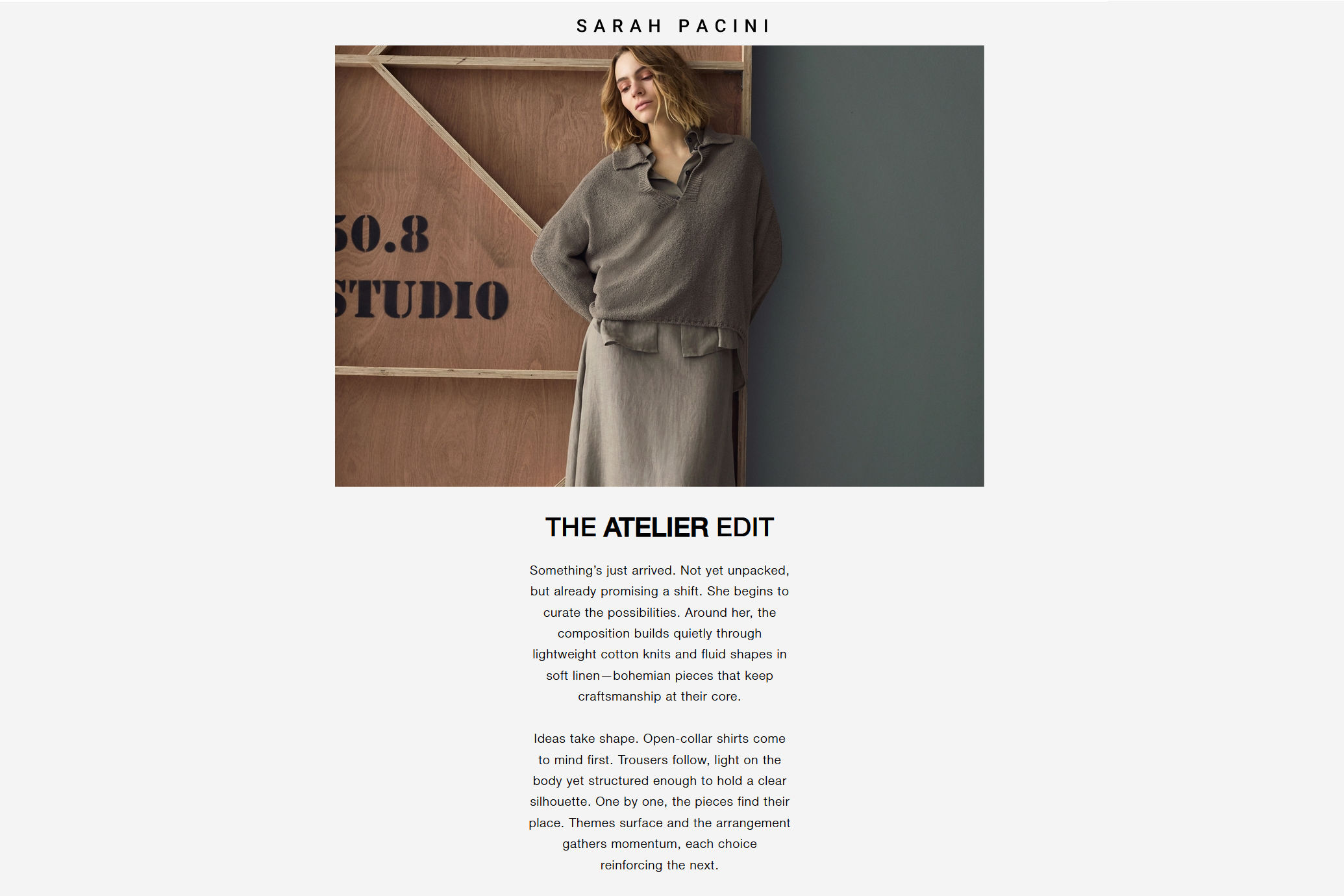
Launch, campaign, repositioning? Start here.
I’ll come to you with samples and next steps that match your project’s pace.
Fashion isn’t just about fabric and fit. It’s about what happens when you put something on and suddenly stand a little differently—the way a piece changes how you move through a room, how you transition between moments. The writer’s job is to capture this shift.
Writing What It Does
Nothing flattens a fashion brand faster than repetition. When every blazer is “timeless and versatile” and every dress “effortlessly elegant,” the language stops carrying meaning. It becomes interchangeable. And in a category where identity is everything, that loss of distinction is a death knell.
My job is to move beyond description into storytelling.
A blazer, for instance, is a shift in posture. On a city street, moving with the pace of foot traffic, it pulls a loose look into line. At work, it reads as clarity: buttoned, sleeves down, everything resolved. Later, at a gallery launch, it’s worn open over softer layers. It creates contrast through length and drape as she moves between conversations—easy and entirely in control.
This is where the copy earns its place, situating a piece in real moments so the fabric and form register through the experience of wearing them.
Staying Attuned to an Evolving Client Base
Beyond the individual pieces, there’s the brand. But like our shape-shifting blazer, it, too, is a matter of malleability, a question of context. Fashion brands evolve and aesthetics shift. Demographics change with them.
A brand might start reaching toward a younger customer or re-engaging one it had moved away from. Sometimes the shift is tonal—moving from a heritage-led identity into something more current. Other times, it’s cultural—where the boundaries between menswear and womenswear start to soften.
I follow how brands position themselves from season to season and pay attention to how their customers respond. But more importantly, I listen to how your audience is changing. The copy needs to feel native to where your brand is now, not where it was three years ago.
Dressing for the Occasion
The brand doesn’t just shift with its audience—it shifts with where that audience is in the journey. Fashion sits in an unusual position in the ecommerce landscape. The purchase is technically a utility (everyone needs clothes), but price point and brand identity mean the emotional value-add is doing most of the work. The problem is that many brands understand this at the awareness stage and then abandon it entirely the moment the customer is closest to buying. The campaign has warmth and world-building. The product page has bullet points.
That drop-off is a copywriting failure. Awareness copy sells the world the brand inhabits. The product page has a narrower job—closing the distance between looking and buying —but it still has to do it emotionally, not functionally. And by retention, the customer has already bought into the identity. The copy isn’t selling clothes anymore. It’s reinforcing who they are for wearing them.
Writing for an International Clientele
The picture gets more complex when the audience spans multiple markets. Shoppers in Paris, Milan, Tokyo, Dubai, Seoul, each bring different relationships to the English language and different cultural registers for what luxury means. Here, word choice has to be deliberate, and sentence structure must stay clean without losing tone.
Fashion copywriting is often idiomatic, which makes this a narrow line to walk. Getting it right comes down to a complete command of language—knowing how far you can push expression without losing clarity, and how to pull back without stripping the writing of character.
My Work
I’ve spent more than a decade writing for high-end fashion, including an intensive project in Brussels where I rewrote nearly 500 product descriptions in ten days—180 from a new Fall/Winter collection and 300 NOS products aligned to an evolving brand voice. It’s the kind of work that demands speed, precision, and an intuitive understanding of what each piece actually does for the person wearing it.
- Product descriptions: Unique, compelling copy for every piece that highlights what makes it special
- Collection storytelling: Seasonal narratives that frame the inspiration, aesthetic, and vision behind a line
- Brand voice development: Defining the language, tone, and personality that makes your brand recognizable
- Lookbook copy: Styling suggestions and context that help customers envision how to wear pieces
- Email campaigns: Launch announcements, exclusive previews, and editorial-style content that builds anticipation
- About pages and brand messaging: Articulating your heritage, values, and point of view
- Social media copy: Platform-specific content that reflects your brand’s visual identity in words
Throughout it all, a strong technical knowledge anchors the writing, bringing a polished editorial lingo that carries the piece with precision.
Writing That Holds Its Shape
Fashion writing has to create a space the reader can step into—a moment, a mood. I use language the way a designer uses yarn, so it falls, flows, and surprises the same way the piece does. Often the first touchpoint, my words let them try it on before they try it on.
More industries
We love innovators and engineers, but boy oh boy, they can be hard to follow. The copywriter steps in as the translator, turning acronyms and technical specs into crisp, clear concepts that connect with users. Beyond exploring what a product does, we drill into why it matters—a shift that transforms backend brilliance into something meaningful for the rest of us.
Education is pivoting toward practical applications, emphasizing tangible outcomes that matter to students. The copywriter must balance real-world relevance with institutional integrity, all while setting the tone for diverse audiences: students seeking value, alumni cherishing tradition, and donors aiming to leave a legacy.
Healthcare copy is where rigour and warmth have to occupy the same sentence. Doctors and researchers speak in dosages and clinical outcomes. Patients speak in fear, hope, and “will I be okay?” The copywriter lives in the space between—making sure that whoever’s reading feels not just informed, but seen.
Hospitality copy earns its keep before the bags are packed. The best of it feels lived-in—specific enough to make a stranger feel like a regular. Successful copywriters aren’t merely along for the journey; they’re tastemakers, actively shaping culture and appetite while anticipating what’s next.